
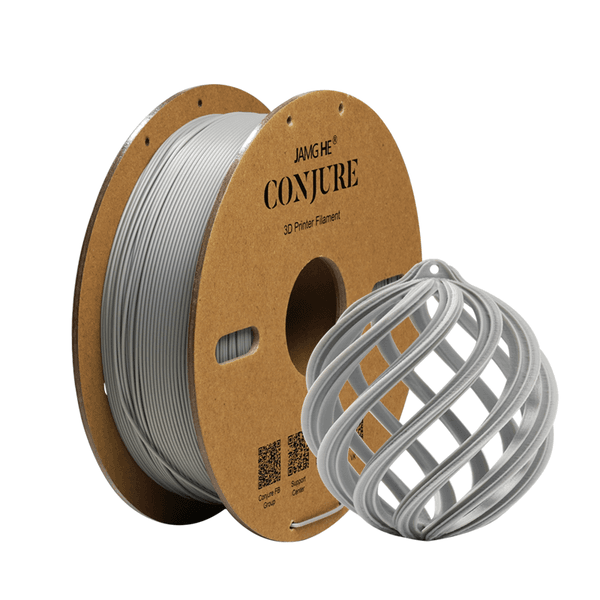
Chitusystems 3D Printing Materials Review 2026
Disclosure: This post contains affiliate links. If you buy through them, we may earn a small commission at no extra cost to you.
Choosing resin or filament can take longer than choosing the printer itself, and prices vary wildly between brands. Chitusystems 3D printing materials, sold under the Conjure name, cover both worlds: UV resins for LCD printers and PLA filaments in silk, PLA+, and high-speed versions. This review is for hobbyists, miniature painters, and makers who want one brand for several kinds of prints. We look at the range, the prices shown in the store, what independent testing says, where the evidence is thin, and who should buy, so you can pick the right material before ordering and avoid wasting money on a bottle or spool that does not suit your printer.
Table of Contents
- Chitusystems 3D Printing Materials Overview
- The Conjure Resin and Filament Range
- Real-World Usage Experience
- How to Choose Between Resin and Filament
- Drawbacks and Limitations
- Chitusystems vs. Other Material Brands
- Who Should Buy Chitusystems Materials
- Current Deal and Coupon
- Price and Where to Buy
- FAQ
Chitusystems 3D Printing Materials Overview
Chitusystems is the 3D printing brand of CBD-Tech, a company founded in 2014 that began with printer control systems and also develops the popular CHITUBOX slicer. Over the years it has widened into accessories and supplies, including filament dryers and screw-free resin vats, and its Conjure line covers the consumables.
The store’s materials collection groups resin and filament together. It describes Conjure products as built for precision, durability, and consistent printing performance, and a banner promotes a Filament Mega Sale across the US, EU, and UK with prices as low as $9.99 per kilogram.
The Conjure Resin and Filament Range
The first page of the collection lists twelve products, and the second page continues the range. The price ranges shown reflect different sizes and variants, though the page does not spell out the sizes or colors.
| Product | Price shown (USD) |
|---|---|
| Conjure Standard 8K Resin | $23.99 to $174.99 |
| Conjure Water Washable Resin | $25.99 to $218.99 |
| Conjure Rigid Resin | $36.99 to $242.00 |
| Conjure Rigid Clear Resin | $36.00 to $242.00 |
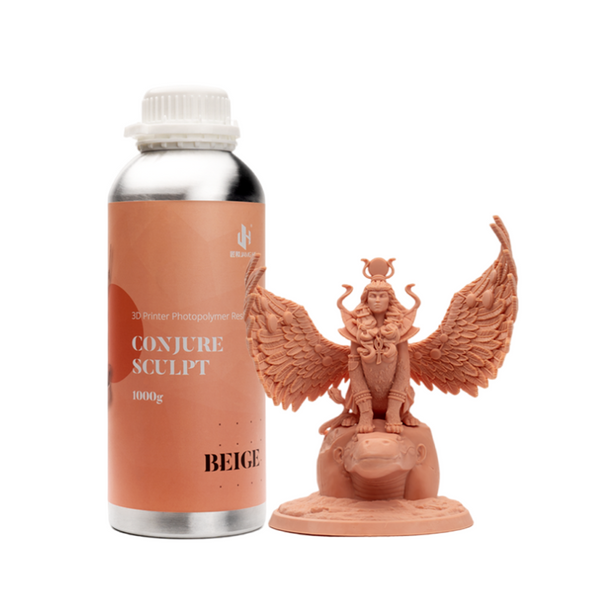
| Conjure Sculpt Resin | $36.99 to $269.00 |
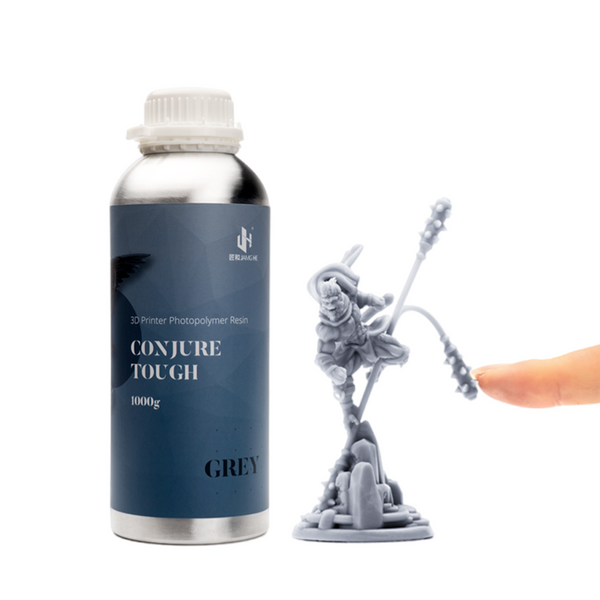
| Conjure Tough Resin | $36.99 to $279.00 |
| Conjure PLA+ / High Speed PLA+ Filament | $15.39 to $40.99 |
| Conjure High Speed PLA+ Filament 3 KG Pack | $40.99 (was $65.99) |
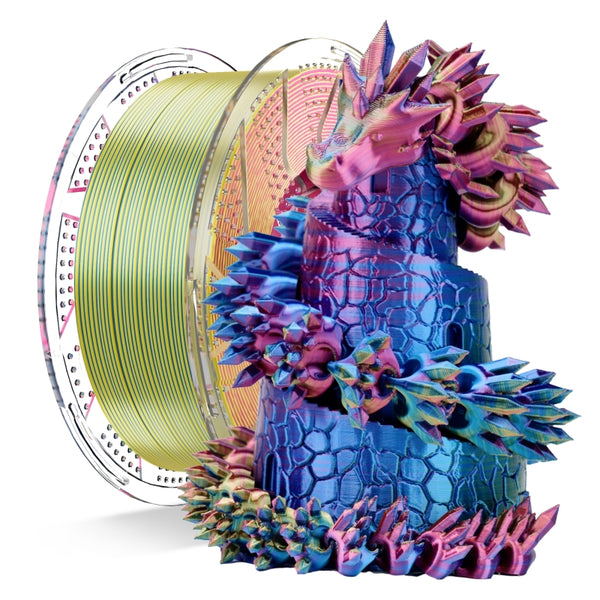
| Conjure Silk Tri-Color PLA Filament | $22.99 to $45.98 |
| Conjure Silk Dual-Color PLA Filament | $22.99 to $45.98 |
| Silk Dual-Color PLA, custom combo (MOQ 8 kg) | $12.99 to $14.99 |
| PLA+ custom combo (MOQ 9 kg) | $9.99 (was $21.99) |
Note that the two lowest filament prices are bulk listings with minimum order quantities of 8 kg and 9 kg. They are aimed at people buying many kilograms in a custom color mix, not at someone who wants a single spool.
Real-World Usage Experience
We have not printed with these materials ourselves, so this section relies on independent coverage and the store’s own descriptions. The most useful hands-on test we found covered Conjure Tough Grey Resin on an Elegoo Mars 3, sliced in ChituBox Basic. The reviewer found a high level of detail and models that bent slightly without breaking, including thin features that felt flexible rather than brittle.
The same review carries a useful caution. The vendor’s suggested exposure of 4.5 to 5 seconds per layer ran on the high side, and the reviewer got better results at 3 seconds, with brittle, overcured supports at the longer time. The reviewer also would not use the resin as a rubber replacement, despite the vendor describing rubber-like properties. In other words, treat the supplied profile as a starting point and run an exposure test.
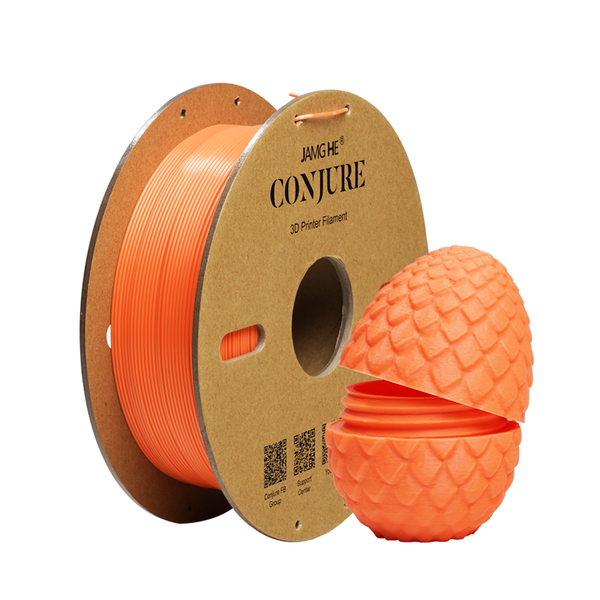
On the filament side, an independent review of the Conjure Silk Rainbow and Matte Rainbow PLA reported good prints, including a helicopter toy on a Creality K1 Max with no stringing, and called the pricing attractive. Coverage of the PLA+ and High Speed PLA+ spools was promotional, so claims such as higher speed capability, minimal warping, and cardboard spools should be read as manufacturer statements rather than test results.

How to Choose Between Resin and Filament
The right material depends mostly on what you print and what printer you own. Resin suits detailed miniatures, jewelry masters, and smooth display models, but it needs an LCD, DLP, or MSLA resin printer, washing, and curing. Filament suits larger, sturdier, and cheaper prints on a standard FDM printer with far less cleanup.
Within the resin range, Standard 8K is the general-purpose pick for fine detail, Water Washable simplifies cleanup, Tough and Rigid target stronger parts, and Sculpt is aimed at sculpting-style work. Within filament, Silk gives a glossy finish, PLA+ is positioned as the tougher everyday option, and High Speed PLA+ is meant for fast printers.
A few safety and quality habits apply to everything here. Wear nitrile gloves and work in a ventilated space when handling resin, keep uncured resin away from skin, and follow the label for washing and curing. Store filament in a dry, sealed container, and always run a small test print before committing to a big batch of a new material.
Drawbacks and Limitations
The range looks broad, but the evidence behind it has gaps you should weigh before buying:
- Missing specs on the collection page: Temperatures, compatibility, and material properties are not listed, and the variants and sizes are not itemized.
- No ratings on the page: The store shows no customer reviews, and independent tests cover only some products, not the whole range.
- Exposure tuning: The one detailed resin test found the vendor’s suggested exposure was too long, so expect to calibrate.
- Wide price spread: Resin prices climb steeply with bulk sizes, so compare the cost per kilogram or liter.
- Bulk-only bargains: The cheapest filament prices require 8 kg or 9 kg minimums.
- Shipping and returns: Terms are on a separate Warranty and Shipping page, so read them before ordering.
Chitusystems vs. Other Material Brands
Versus Elegoo and Anycubic resins
Elegoo and Anycubic also sell resin in many types, and both are popular choices on common LCD printers. We did not run a line-by-line price comparison because prices change often, so check the current price per kilogram. Chitusystems brings the advantage of being tied to the CHITUBOX slicer ecosystem, which may make profiles easier to find.
Versus Sunlu and Elegoo filaments
Sunlu and Elegoo sell budget PLA, PLA+, and silk spools in large color ranges. The Chitusystems sale prices, from $9.99 per kilogram on bulk listings, are competitive on paper, but rivals may offer more published test data and smaller entry quantities.
Who Should Buy Chitusystems Materials
These materials suit hobbyists who run both resin and FDM printers, miniature painters who want detailed prints, makers who go through many kilograms of PLA, and anyone already using ChituBox who likes the idea of one brand for supplies. Bulk buyers will find the minimum-order color combos most interesting.
They are a weaker fit if you need documented engineering data, such as exact tensile strength or temperature resistance, for functional parts. In that case, request datasheets from the brand or buy a single bottle or spool to test first.
Current Chitusystems Deal and Coupon
Chitusystems promotions change from time to time. At the time of writing, our coupon page lists a Lucky Draw offer worth $20 off, which is subject to its own terms and eligibility. Offers can vary by country and promotion period and may end without notice, so confirm the details on the store before you check out.
Price and Where to Buy
Prices on the collection page start at $9.99 for a PLA+ bulk listing, shown against a struck-through $21.99, and run up to several hundred dollars for the largest resin quantities. The High Speed PLA+ 3 kg pack was shown at $40.99, down from $65.99. Since sale prices change quickly, treat these numbers as a snapshot and confirm the total at checkout.
For context, an independent review put Conjure Tough Resin at about $39 and up, sold in 500 g and 1 kg sizes, which fits the lower end of the range shown in the store.
FAQ
What does Chitusystems sell besides resin and filament?
The brand also makes printer control systems, the CHITUBOX slicer, filament dryers, and screw-free resin vats.
How much does Chitusystems filament cost?
The collection lists filament from $9.99 on a bulk PLA+ listing up to $45.98 for silk spools, with the High Speed PLA+ 3 kg pack at $40.99.
Which Chitusystems resin should I choose?
Standard 8K suits general detail work, Water Washable simplifies cleanup, and Tough, Rigid, and Sculpt target stronger or more specialized prints.
What does MOQ mean on the filament listings?
MOQ stands for minimum order quantity. The custom color combo listings require at least 8 kg or 9 kg per order.
Do I need special settings for the resin?
Start with the profile from the brand, then run an exposure test, since an independent review found shorter exposure worked better on one resin.
Conclusion
Chitusystems 3D printing materials give you resins and PLA filaments from one brand, with sale prices starting at $9.99 on bulk filament and independent tests that were mostly positive. The main caveats are thin specs on the collection page and the need to tune exposure for resin. If you want to try Conjure, check the current prices and any available Chitusystems discount, and start with a single bottle or spool before ordering in bulk. Run a small test print first so you can confirm the settings suit your printer.

